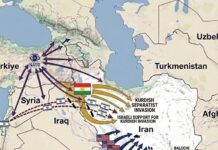
To confront the next phase of the conflict with the US, Iran has opened another battlefront through its ally, the Yemeni Ansar Allah (Houthi) movement. In retaliation for the air and land blockade imposed by Saudi Arabia on Yemen, the Houthis announced this week that they would close the strait to Saudi ships, thereby intensifying the maritime blockade. Immediately following this announcement, they transformed the threat from a mere warning into an active battlefront by attacking two Saudi oil tankers. These were not warning shots fired merely at the rudder; they actually set one of the ships ablaze.
This has reignited the Yemeni civil war. Saudi Arabia and the UAE have coordinated their efforts and are mobilizing their forces to strike the Houthis. Simultaneously, the Saudi-backed national government has launched an offensive, a move set to further escalate the conflict. Until last week, Saudi Arabia exported approximately 4.5 million barrels of oil daily via the Red Sea port of Yanbu. Of this, about 2.5 million barrels destined for Asian markets traveled southward through the Bab el-Mandeb Strait—a route that is now blocked. The alternative route, which circles the African continent, adds between 6,000 and 6,500 kilometers to the journey, equating to an additional 10 to 14 days of travel. Fuel and operational costs alone could rise by up to US$1.5 million per ship. Maritime insurance costs have surged significantly, and some insurance companies are refusing to provide coverage.
The Saudis have refused to negotiate and have already issued warnings to their own naval vessels and those of allied nations. Under these circumstances, the situation could deteriorate drastically. The European Union is conducting Operation ‘Aspides’; its mandate is strictly defensive—specifically, to protect legitimate commercial shipping in the region without authorization to launch attacks on Yemeni territory. In contrast, the United Kingdom and the United States operate under separate commands, undertaking offensive missions to strike targets within Yemen.
Years ago, a coalition force comprising around 30 ships struggled to contain the Houthis; at that time, the Houthis’ military capabilities were far inferior to what they possess today. Despite deploying an aircraft carrier and launching extensive air strikes during those conflicts, the United States lost three F-18 aircraft and ultimately failed to prevail in the confrontation.
In the current conflict involving Iran, the United States could potentially draw European nations into a wider confrontation—a process that might begin with efforts to reopen the strategic straits. Crude oil prices have recently surged past $100 per barrel for the first time since late May.
Prices could continue to rise rapidly, while the risk of a complete closure of shipping routes remains. It is anticipated that both the Red Sea and the Strait of Hormuz could face short-term blockades, potentially compelling a move toward negotiations.
Meanwhile, there are ongoing exchanges of fire between the U.S. and Iran, as well as attacks on U.S. bases in the Gulf region. Just as U.S. strikes degrade Iran’s defensive systems in preparation for future operations, Iran is attempting to strike U.S. targets using older missiles and drones—tactics that also serve to deplete U.S. interceptor missile stockpiles.
The U.S. has utilized over 1,450 Patriot PAC-3 missiles in the conflict with Iran so far. With stockpiles significantly depleted, the U.S. was forced this week to deploy older PAC-2 interceptor missiles—a variant that had not been in active use for decades. This situation highlights the precarious state of the nation’s interceptor missile inventory.
Production of interceptor missiles is sluggish, and there are no global stockpiles available for large-scale redistribution. However, a question remains: is the production, refurbishment, and upgrading of Iranian missiles proceeding at a rapid pace? This serves as the most critical factor in determining future events.
However, the Iranians hold the advantage in this regard. The US and Israel will attempt to bridge this gap by deploying NATO ships to assist with interception operations; yet, this would yield only an additional 200 to 300 interceptor missiles.
Nevertheless, Iran’s arsenal in certain areas will continue to pose a major challenge to interception efforts. Consequently, questions have arisen as to whether the US—facing such difficulties during attacks—could actually launch a ground operation.
It is assumed that if the American coalition forces start a ground operation, Iran will also start a ground operation in response. If it starts then Kuwait will be the first to fall, and it will happen very soon. Unlike Saddam Hussein, Iran will not limit itself to Kuwait, but will continue its offensive against other countries in the Gulf Cooperation Council. Bahrain, Qatar, and the United Arab Emirates, then Oman, and finally Saudi Arabia.
In this way, Iran will destroy Jordan as well. Nothing illustrates the meaning of “failure” more clearly than the collapse of oil-producing countries, fuel shortages, famine, and mass migration. Trump cannot stop the emergence of a “Greater Iran” because that requires realism and an understanding of history, not denial, illusions and fantasy. Overall, America is on the brink of an inevitable defeat, says a University of Miami professor and geopolitical analyst.
Meanwhile, the Pentagon has removed the names of the four soldiers who died in Jordan from the official list of casualties. They explain that this is because “these deaths occurred after President Trump declared a ceasefire in the war in April.” If they are so worried about the deaths of four people, I can’t even imagine how they are going to deal with future casualties as the war escalates.